Services & Projects
Weed Identification
The most common question we get: "What's this weed?"
We love this question, but do ask that you provide us with a good, representative sample, or even a series of photographs of the weed you are concerned about. Samples that include flowers or fruit are often essential for positive identification. Photos should include both close-up, detailed and high-resolution pictures of the stem, nodes, flowers or fruits, as well as pictures taken further back to see the overall shape and size of the plant. You can drop the sample off at the weed office or email us a photo. From there, we will begin the process to provide you with more information and resources about the plant of concern. This may take some time, depending on the rarity of the plant in question, so please be patient!
Educational Programs
We are available for weed management presentations or related educational programs, targeted towards both youth and adults. Successful weed control requires accurate weed identification, analysis of the surrounding habitat, understanding of the numerous control methods that are available, and knowledge of how to carry out the best control approach. We can help make sense of all these factors, and can tailor our outreach materials and presentations to a variety of audiences.
Reference Materials
We have many reference sources and publications available to assist in weed identification and management. Check out our Weeds in Lewis County page for information on many of our more common noxious weeds in our county, but be sure to check with our office staff, as well, to get more information specific to your area and your problem weed.
Compliance Services
Please contact us regarding your concerns about any problem weeds on your property. Throughout the growing season, program staff regularly survey for and contact landowners regarding the need for noxious weed management. If you would like to notify us of a noxious weed infestation that is not located on your property, please utilize our reporting tool. We ask that you provide as much information as possible, and make sure to drag the marker on the interactive map to the infestation location.
Onsite Weed Surveys & Management Recommendations

Did you just buy a beautiful piece of land in Lewis County, and suddenly realized you need a little help in understanding how to manage your pasture, forest, or wildlife habitat? Or perhaps conditions are changing on a property that you've had for a while? Don't worry, we are available to do on-site visits for landowners regarding noxious weeds such as Canada thistle, Tansy ragwort, Blackberries, and other common noxious weeds, and make recommendations on your next step to successfully managing your land.
We also recommend reaching out to the Lewis Conservation District for further resources and programs relevant to new farmers, producers, and riparian landowners.
Tool Lending

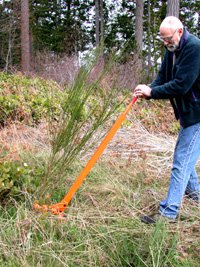
We also make weed wrenches available as a free rental for scotch broom and other woody shrub species removal. Stop in or call us at (360) 740-1218 to reserve a weed wrench today!
We're happy to loan these out for a few days to a week at a time, depending on the demand, but it never hurts to ask for two weeks. We do require a signed waiver and agreement, as well as a picture of the renter's ID.
Washington Wilderness Hay and Mulch Program (WWHAM)

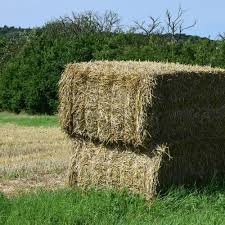
If you are a farmer looking to have your forage or mulch product officially certified as "weed free," we do in-house field inspections and certifications. or, if you are a consumer and you need to find a "weed free" hay or mulch source, we can help you find WWHAM producers. Find out more about the certification here and see the 'prohibited plant list' here.
Please contact us if you are a grower and would like to have your crops inspected and certified. Early contact and scheduling is appreciated, even if a specific harvest day is not known.
Licensed Contractors
There are several contractors and vendors available for hire within Lewis County that are qualified to work with landowners to control noxious and invasive weeds. What we provide here is not a comprehensive list, but a great place to start. A printer-friendly version is available here: Vendors.
Eradication of Class A Noxious Weeds
Class A noxious weeds are Lewis County Noxious Weed Control's highest priority for early detection and rapid eradication. Generally, these noxious weeds are either entirely absent in Washington State or are only present in a very limited distribution. As such, and as required by law, the management goal for these weed species is total eradication in all plant parts. Garlic mustard, Giant hogweed, False brome and Milk thistle are all examples of Class A noxious weeds that have become more common in the state in recent years and could conceivably arrive in Lewis County from neighboring areas. Our program staff are always on the lookout for new populations, and we appreciate tips on any of these species from concerned residents.
The only class A noxious weed that is currently known within the confines of Lewis County is a single infestation of Milk Thistle, in a common dumping area of Centralia, WA. The infestation was found in mid-summer 2022 and is being addressed by the noxious weed office accordingly. We will continue to check the status of this infestation regularly and take action to prevent its reestablishment.
Historically, there have been records of Giant Hogweed in Lewis County, but to the best of our knowledge they have been eradicated. Reports of Giant hogweed in Lewis County are received and investigated each year, but most turn out to be the native Cow parsnip, a common lookalike. False brome, eggleaf spurge, and Turkish & Slenderflower thistles have not been known to occur in the county as of the date of this writing, but are known to exist in Cowlitz County, just to the south. We monitor likely encroachment areas multiple times a year. Other Class A noxious weeds that Lewis County citizens should be aware of include: Garlic mustard, Flowering rush, and Hydrilla. The latter two are both aquatic weeds which are problematic for our water bodies. Aquatic weeds are easily spread through boating and other water recreational activities, especially when owners do not clean, drain and dry their watercrafts between using them in different waterbodies.
Any known infestation of the above plants within Lewis County will become the program's highest priority upon discovery. If you think you have found an infestation of a Class A noxious weed within the confines of Lewis County, please notify program staff immediately.