Your Property Value Went Up. Here Is Why Your Tax Bill Might Not Have
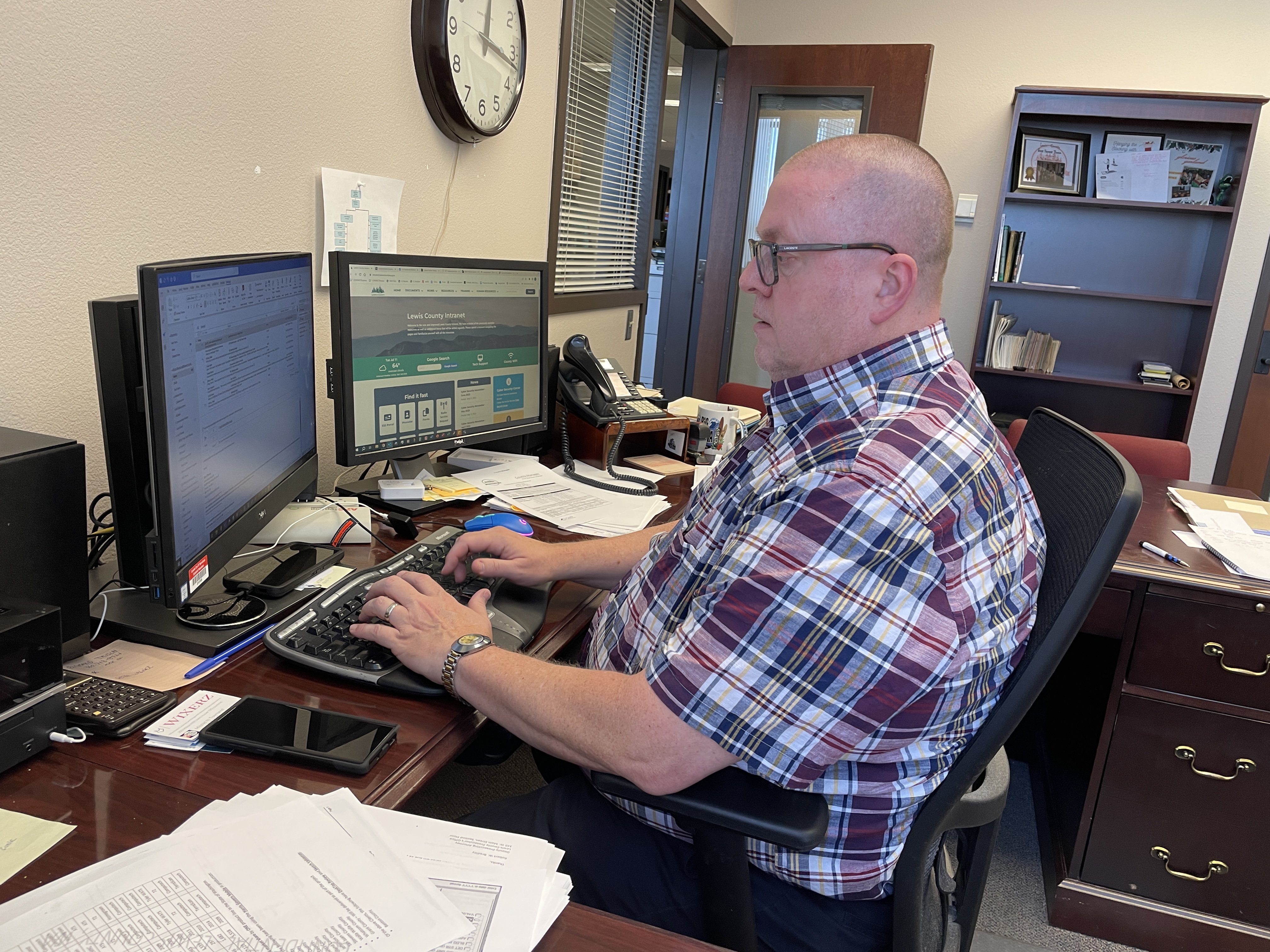
A common misunderstanding drives a lot of frustrated phone calls to the Lewis County Assessor's Office each year: that a rising home value automatically means a rising tax bill. Lewis County Assessor Ross Nielson said it does not work that way.
The Assessor's Office does not set tax rates and does not decide how much money the county collects. Its job, as laid out in Article VII of the Washington State Constitution and RCW 84.40, is to value every property to ensure the amounts already approved for local taxing districts, such as fire districts, cemetery districts and school districts, are divided fairly. Those districts establish the amount of property tax revenue needed to fund their budgets, not what rate they want to charge, and submit that amount to the Lewis County Board of County Commissioners, which then certifies those amounts to the Assessor's Office.
The Assessor's Office turns the districts' dollar amounts into a rate based on the total assessed value of each district. For example, a fire district that needs $1 million from property worth $1 billion in total would charge $1 for every $1,000 of assessed value. If every property in that district doubled in value overnight, the rate would drop to 50 cents per $1,000 to collect the same $1 million.
State law restricts taxing districts to a 1% maximum annual increase in regular property tax revenue (excluding new construction, "improvements" and voter-approved measures). The rate itself is not a policy choice. Nielson called it "literally a math problem."
This matters most when a tax bill goes up sharply. A bigger bill almost always comes from a taxing district asking voters for more money, such as a new school bond or a fire district levy, rather than from the Assessor's Office increasing values. When the value of every property in an area goes up, what each owner owes compared to what their neighbors owe does not change. The office's work is equalization: a home worth twice as much as another should pay twice the tax, whatever either one is worth.
Most of that work is statistics. State law requires a physical inspection of every property at least once every six years, so the Assessor's Office splits the county into six regions and physically inspects one of the regions each year. To determine market values in the years a property is not inspected, the office uses sales from the year before. It compares recent sales in an area against its own assessed values, then applies adjustment factors to land and "improvements" separately. The standard is 100% of market value on average, and the office aims for about 95% so that almost every owner is assessed at or below what their property would sell for. The values are checked several times before the Washington State Department of Revenue reviews the office's work.
The term "improvements" often causes confusion for property owners. In Washington state, the term is used for property tax purposes to describe any human-made structures or physical additions built on, or attached to, bare land, such as houses, garages, outbuildings, wells, septic systems, barns and driveways. It doesn't necessarily reference upgrades or imply something has been done to make the property "better" or "nicer." Instead, it refers broadly to the value of any man-made fixtures or structures on the property. Those values can fluctuate; as the price of real estate increases or decreases, the assessed value increases or decreases accordingly.
Property owners who disagree with the value the Assessor's Office assigns can appeal it to the Lewis County Board of Equalization, an independent board separate from the Assessor's Office, and then to the Washington State Board of Tax Appeals. About 350 property owners appeal each year. The assessor's valuation is presumed correct, so the property owner must bring evidence that it is wrong. Nielson said he encourages people to come in before filing anything formal, since a conversation at the counter can catch errors the county's records missed. He once arrived at a property for field work with records showing a large barn, and the owners told him it had burned down years earlier.
The Assessor's Office does more than set home values. It reviews every survey filed by private surveyors before a property line change is recorded, checks that legal descriptions mathematically close when land is sold or split, and processes every property sale into the county's records. It also assesses business personal property, such as restaurant ovens or leased gas pumps, using standard depreciation schedules, and tracks properties exempt from taxation, including government land, nonprofits and cemeteries. One small, long-neglected pioneer cemetery in the Adna area had gone into foreclosure with no clear owner of record. Staff searched genealogy records and knocked on doors until they found a family connected to the site and helped them to get its exempt status restored.
The Assessor's Office has also built online tools that show residents how the numbers work. Its website includes a calculator that shows how a proposed levy would change a resident's own tax bill if it passes and if it fails, and a five-year comparison of how each taxing district's assessed value and collections have changed. Historical property record cards, which staff once had to pull from storage for anyone who asked, are now posted online going back decades.
The Assessor's Office also helps administer the state's property tax exemption and property tax deferral programs, such as those for senior citizens and individuals with disabilities, as well as the state's "current use" programs, which apply preferential taxation to qualified property owners who commercially farm, grow and harvest timber on, or preserve their land.
With change of value notices from this year's revaluation going out in the mail this week, Nielson said he wants to encourage anyone with questions about their property values to come in and ask questions.
"There's no targeting of anyone," he said. "We want to be the correct value, not high, not low."
Information about the Assessor's Office, including how to apply for property tax exemptions and special programs, is available at lewiscountywa.gov/offices/assessor.
Information about the Board of Equalization is available at lewiscountywa.gov/offices/commissioners/board-of-equalization.