How Lewis County Prepares for Flood Season
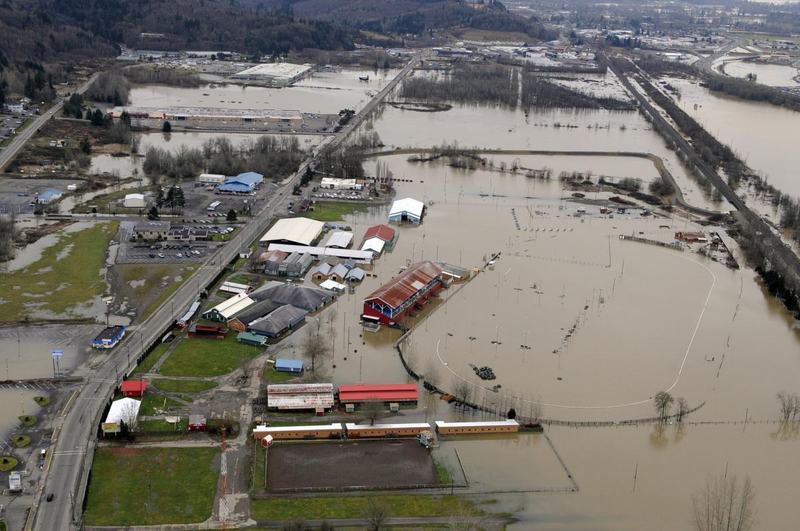
How Lewis County Prepares for Flood Season
As flood season begins this fall, Lewis County's Department of Emergency Management (DEM) and the Lewis County Sheriff's Office are getting equipment in place, checking their systems and asking residents to make a plan to leave before the water rises. Residents can learn how to prepare at the county's annual Flood Meeting, which is open to the public, from 1 to 3 p.m. Wednesday, Oct. 28, at the Lewis County Historic Courthouse in Chehalis.
Each year, flood season begins with a kickoff flood meeting and a walkthrough of the county's Emergency Operations Center, known as the EOC. A small team tests the center's phone lines and equipment to make sure everything works before a storm arrives.
During a flood, rescue crews work out of an incident command post, while the EOC handles media, finds the resources those crews need and sends out situation reports. DEM staff meet with the affected jurisdictions sometimes twice a day during an incident.
"We support them," said Erika Katt, deputy director of DEM. "We help with media and public messaging. We help with any type of resources they may need. We provide situational awareness to local, state and federal partner agencies. We collaborate together, all together as a team."
The planning starts days before a storm. When serious weather is expected, the National Weather Service sends the county a briefing, and DEM invites the Sheriff's Office, Lewis County Public Works and Lewis County Public Health to take part. Staff watch river gauges and the National Oceanic and Atmospheric Administration river forecast, which predicts river levels a couple of days ahead. When the forecast reaches minor, moderate or major flood levels, the agencies decide who will go where and begin monitoring the gauges live.
The county provides advance warning of potential hazards to help residents prepare, take protective actions and make informed decisions about their safety. Residents in areas that typically flood first receive notices ahead of anticipated flooding, allowing time to move vehicles and belongings, make arrangements and prepare to leave if needed. Residents are encouraged to sign up for Lewis County Alerts to receive emergency notifications for their area.
Deputies cannot force anyone to leave their home. Undersheriff Kevin Engelbertson said that is one of the hardest parts of the job. Deputies often tell people they need to leave, and often the same people call for help about 12 hours later.
"We know where the water is going to start impacting first," Engelbertson said. "We tell them it's going to be bad, you need to leave."
The most common calls deputies receive during a flood are from families who are stranded in their homes and cannot drive out.
The county's flood response changed after the 2007 flood, the largest in recent county history. At the time, the Sheriff's Office had only its Marine Patrol unit, and deputies borrowed boats from residents to reach people. Field Operations Chief Rick Van Wyck, who has been with the Sheriff's Office more than 25 years, said residents were a big help during that flood, but the county needed its own team.
In 2009, the Sheriff's Office partnered with several area fire agencies and other first responders to form its Swift Water Rescue Team. Engelbertson and Van Wyck were among its first members. Team members complete a three-day course that covers how moving water behaves, how to recognize and avoid hazards, how to use ropes and knots, how to run a boat in fast water, how to assess risk and how to search for and rescue people. An advanced course teaches how to set up technical rope systems.
Today, the Swift Water Rescue Team includes roughly 30 members, six of them from the Sheriff's Office and the rest from partner fire and wildlife agencies.
Responders also have more equipment than they did in 2007, and state help arrives faster. In 2007, getting helicopters to the county was difficult. Van Wyck said that during the most recent major flood, which hit in December 2025, the state offered a helicopter before the county needed one.
That flood also changed how leaders manage their crews. Because water rose across the whole county at once, leaders now send some team members home to rest while others work, so fresh crews are ready if a flood lasts longer than expected, and they hold some members back in case a second emergency starts elsewhere.
Starting in October, the Sheriff's Office moves boats and other equipment to the east end of the county, where roads can be cut off during a flood.
DEM and the Sheriff's Office both credited Lewis County Public Works, which delivers sand, closes roads, puts up road closure signs and prepares its equipment for winter. During the 2007 flood, Van Wyck rode in a Public Works dump truck to rescue people who were stranded in their vehicles.
Those closures only work if drivers respect them. Drivers who go around road closure signs can be cited. The Sheriff's Office cited drivers last year, and some had to be rescued twice. Van Wyck said it takes much less water than many people think to wash a car off the road, even a four-wheel-drive vehicle.
The agencies have one main message for residents: be prepared ahead of time, know where to find information and leave when asked.
"If you're going to stay here, we may not be able to get back to you," Van Wyck said.
DEM posts evacuation notices, press releases and flood information on its website and its Facebook page. Residents can also sign up for Lewis County Alerts at lewiscountywa.gov/departments/emergency-management/lewis-county-alert.
People who do not live in a flood zone can help before a flood by filling sandbags and helping friends and family move to higher ground. During a flood, they should stay away from flooded areas, and those who are able can offer a place to stay to friends or family who have to leave their homes. After the water goes down, volunteers are needed for cleanup.
Residents can hear from the agencies that respond to floods at the county's annual Flood Meeting from 1 to 3 p.m. Wednesday, Oct. 28. The meeting is open to the public, and everyone is welcome to attend. It has a new location this year: the Board of County Commissioners hearing room on the second floor of the Lewis County Historic Courthouse, 351 NW North St., in Chehalis. Speakers will share updates from the National Weather Service, Lewis County Emergency Management, the Lewis County Sheriff's Office, Lewis County Public Works, the Office of Chehalis Basin, the Chehalis River Basin Flood Authority and the U.S. Army Corps of Engineers. For questions, contact Lewis County Emergency Management at 360-740-1151 or dem@lewiscountywa.gov.
Hear more about the plan
Residents can hear from the agencies that respond to floods at the county's annual Flood Meeting from 1 to 3 p.m. Wednesday, Oct. 28. The meeting is open to the public, and everyone is welcome to attend. It has a new location this year: the Board of County Commissioners hearing room on the second floor of the Lewis County Historic Courthouse, 351 NW North St., in Chehalis. Speakers will share updates from the National Weather Service, Lewis County Emergency Management, the Lewis County Sheriff's Office, Lewis County Public Works, the Office of Chehalis Basin, the Chehalis River Basin Flood Authority and the U.S. Army Corps of Engineers. For questions, contact Lewis County Emergency Management at 360-740-1151 or dem@lewiscountywa.gov.